
2026 WAEC GCE Chemistry Questions and Answers Expo: In today’s article, we have shared the verified 2026 WAEC GCE Chemistry expo for Essay and Objective (OBJ), And Practical delivered early and reliably.
NOW AVAILABLE CLICK HERE TO CHAT US ON WHATSAPP TO PAY AND GET IT IMMEDIATELY
CORRECT: 2026 WAEC GCE Chemistry Expo Questions And Answers
The West African Examinations Council (Private WAEC) has officially scheduled the 2026 WAEC GCE Chemistry paper to take place on Monday 5th October 2026.
As the exam date approaches, many students are actively searching for WAEC GCE 2026 Chemistry Questions and Answers, WAEC GCE Chemistry Expo 2026 Essay and OBJ, 2026 WAEC GCE Chemistry Practical Expo, Chemistry Practical WAEC GCE 2026 Questions and Answers, and other trusted study materials. Rest assured, you have come to the right place.
WAEC is responsible for assessing the academic performance of secondary school students across West Africa.
Are you writing the WAEC 2026 exam? Are you looking for verified chemistry answers? Welcome to this page, the most reliable source for genuine 2026 WAEC GCE Chemistry Expo answers, covering both Essay, Theory, Objective (OBJ) and practical sections.
At MASTERJOB, we don’t just make promises—we deliver. Our early and accurate delivery gives you enough time to study, practice, and build confidence before entering the exam hall. We are the top-rated WAEC Runz/Expo provider, trusted by thousands of candidates and school owners.
If you are determined to score an A1 in WAEC GCE Chemistry this is your best opportunity. With MASTERJOB guiding you, success is guaranteed.
Join us on WhatsApp at 07042290657 for early access to the chemistry questions and answers, delivered at least 4 hours before the exam begins.
What To Expect In The 2026 WAEC GCE Chemistry Expo Package?
Our comprehensive package includes:
- WAEC GCE Chemistry Essay Questions & Answers 2026
- WAEC GCE Chemistry Objectives Questions & Answers 2026
- WAEC GCE Chemistry Practical Questions & Answers 2026
All answers are 100% verified and compiled by chemistry experts with years of experience preparing candidates for WAEC exams.
2026 WAEC GCE Expo Subscription Plans
Gain access to verified WAEC 2026 questions and answers delivered directly to your device.
Subscription Packages:
- All Subjects (Science, Art & Commercial):
- Science Department Only
- Art Department Only
- Commercial Department Only
- Daily Subscription
Choose your preferred department/subject and Contact us on WhatsApp at to get payment details and secure your slot today 07042290657.
CHAT WITH US ON WHATSAPP TO REGISTER AND ACCESS IT NOW
Subjects Offered For The 2026 WAEC Expo
At MASTERJOB, we cover all approved WAEC subjects, including:
- English Language
- Mathematics
- Biology
- Chemistry
- Physics
- Agricultural Science
- Animal Husbandry
- Computer Studies
- Civic Education
- Data Processing
- Financial Accounting
- Economics
- Government
- Further Mathematics
- Geography
- Literature-in-English
- Visual Art
- Office Practice
- Islamic Religious Studies (IRS)
- Christian Religious Studies (CRS)
- Igbo
- Yoruba
- Hausa
- Bookkeeping and more.
How To Subscribe For 2026 WAEC GCE Chemistry Questions And Answers
STEP 1: Make a payment of N1500 or MTN Recharge Card. Ask for the details here
STEP 2: Send your payment details to WhatsApp using this format:
- Subject: Chemistry
- Your Full Name
- MTN Card PIN or Proof of Payment
- Active Phone Number
STEP 3: Once confirmed, you will be added to our VIP delivery group for early access.
Note: We don’t offer free stuffs, All questions and answers are released at midnight or at least 4 hours before the exam begins.
WAEC GCE Chemistry Past Questions And Answers
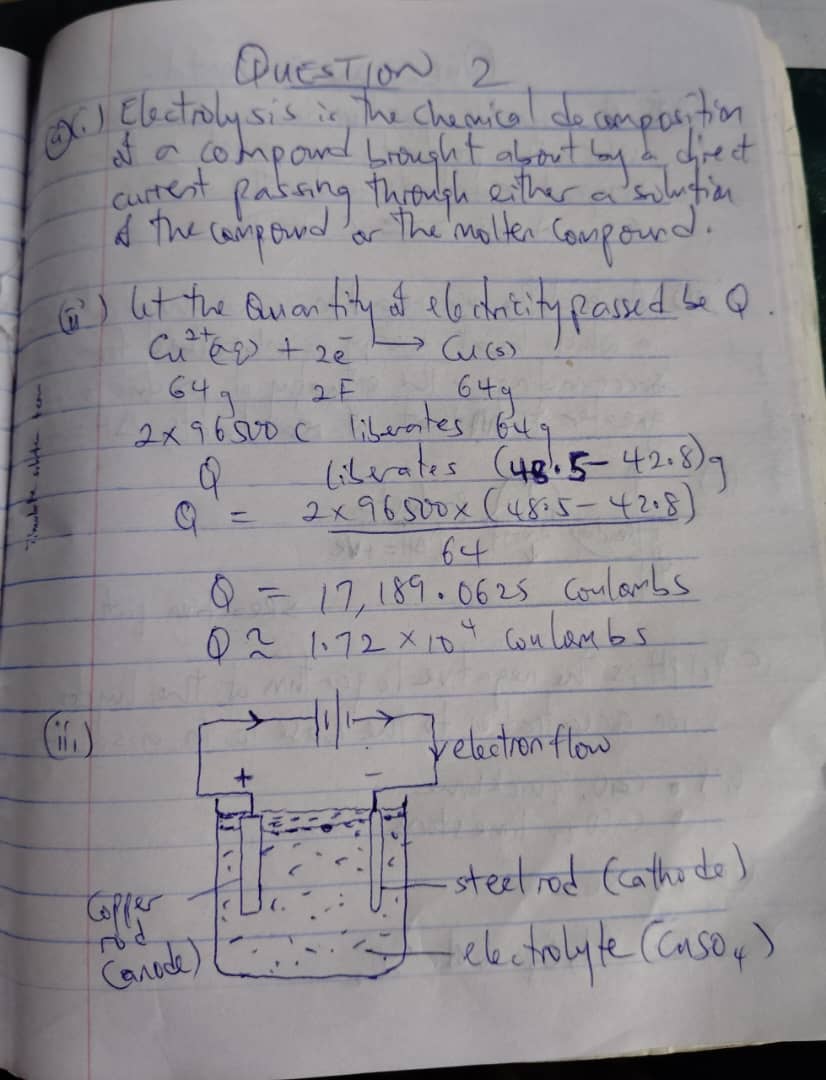
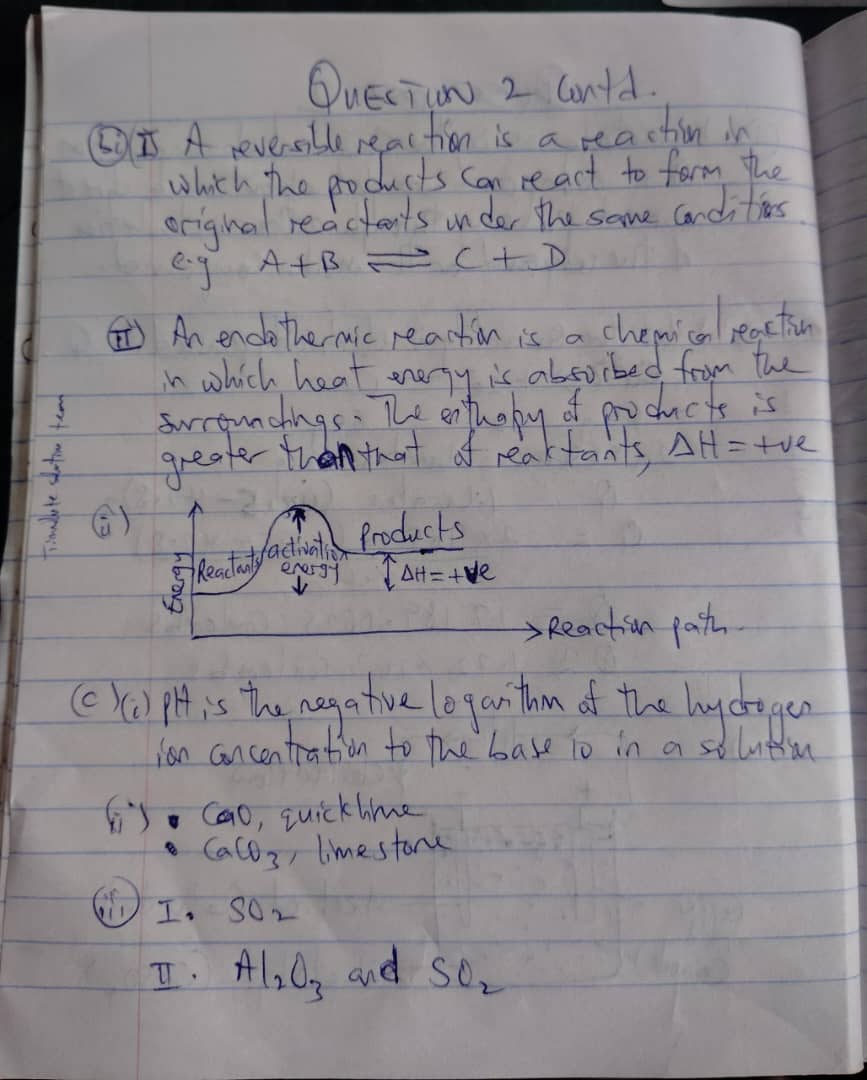
Chemistry Essay Answers
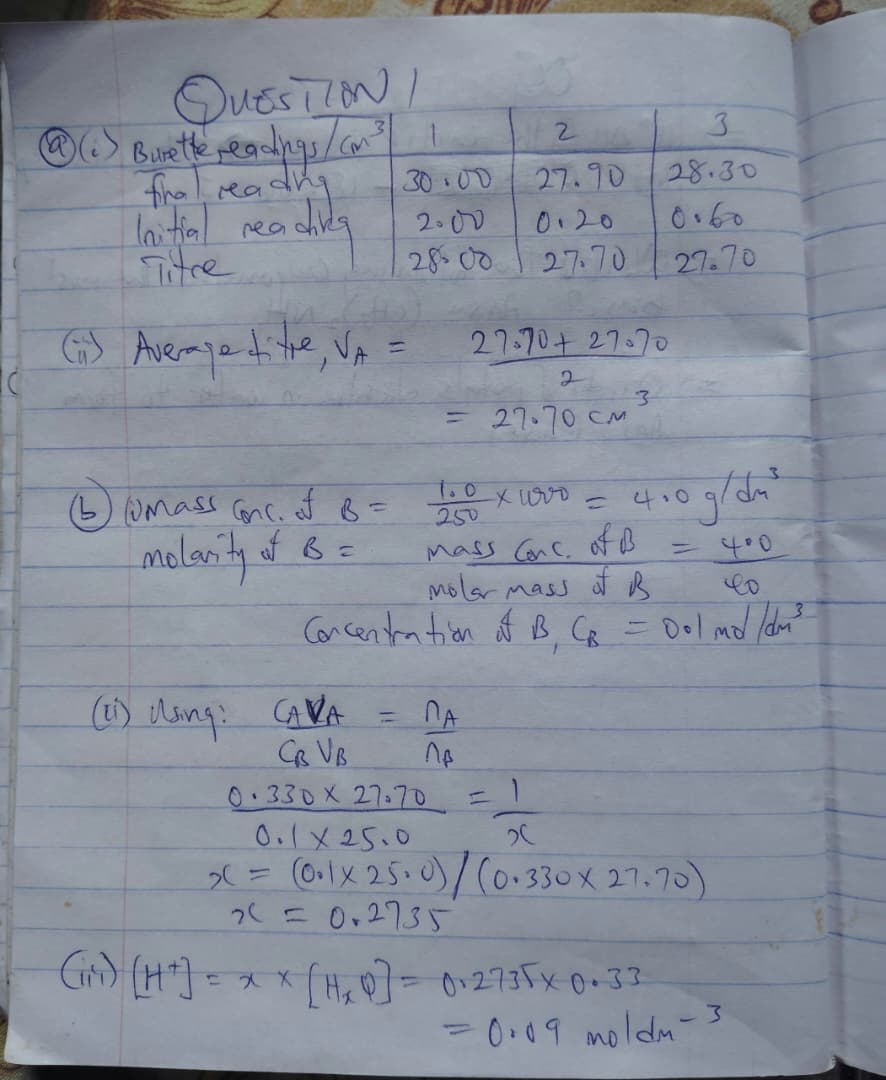
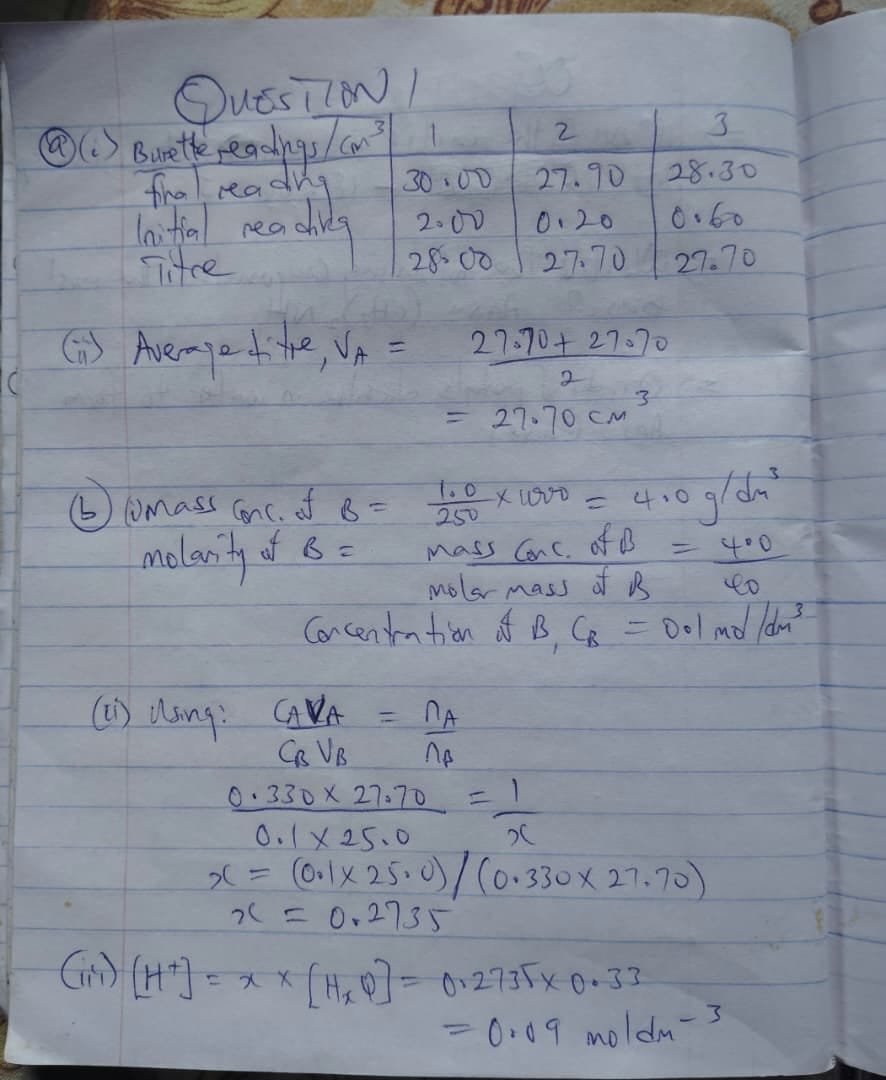
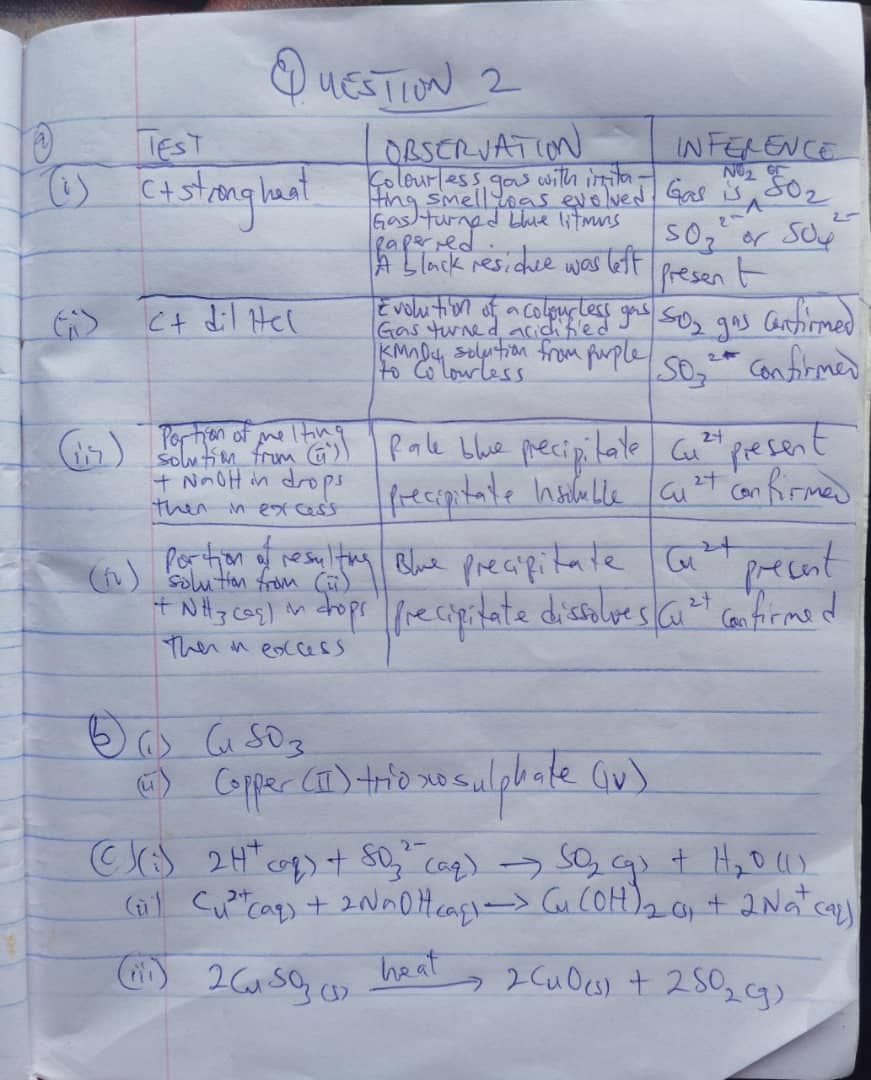
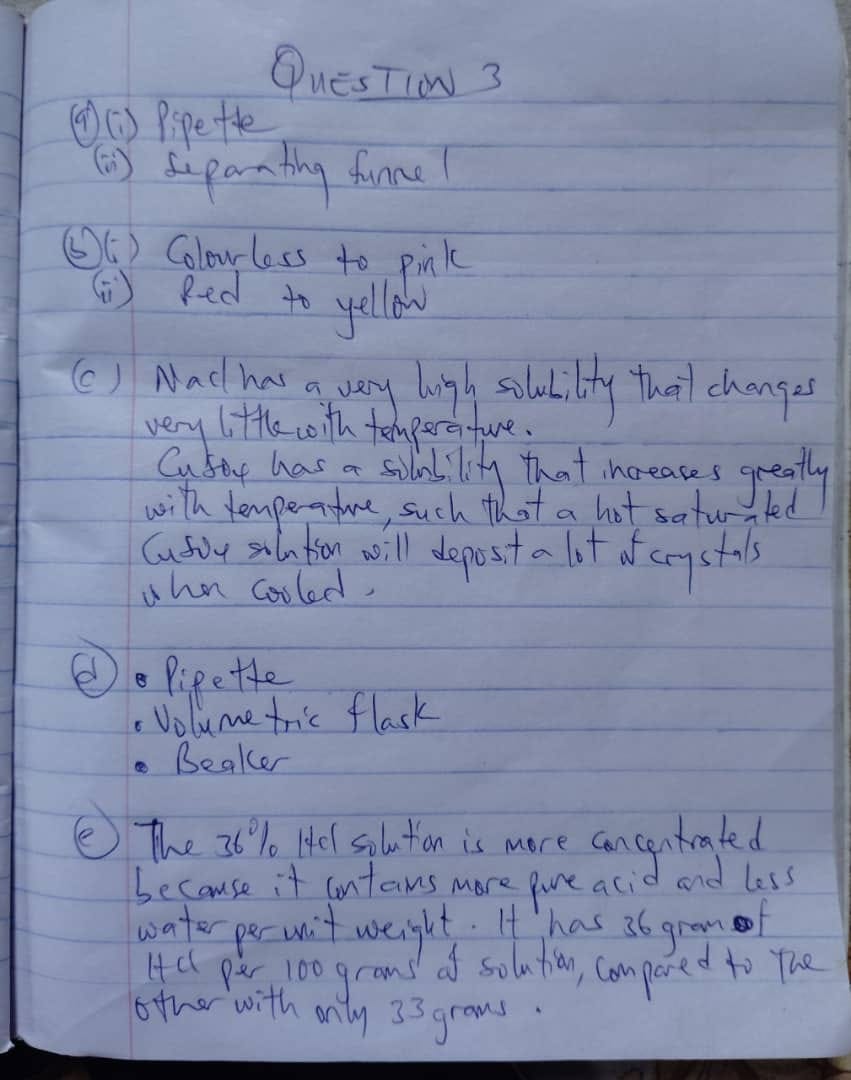
Chemistry Practical Answers
WAEC GCE Chemistry 2026/2027: Syllabus, Areas of Concentration, Exam Structure & Marking Scheme
Welcome to this WAEC GCE Chemistry 2026/2027 study guide. This page has been updated to bring together the Chemistry topics, syllabus areas, examination structure, practical preparation, calculation areas and answering strategies candidates need for their preparation.
Chemistry is not a subject that can be prepared for effectively by memorising isolated definitions alone. Candidates are expected to understand chemical principles, carry out calculations, interpret observations, write equations and apply Chemistry to practical situations.
That is why this guide is arranged around three important areas: the WAEC GCE Chemistry syllabus, the WAEC GCE Chemistry areas of concentration and the WAEC GCE Chemistry examination structure and marking scheme.
WAEC’s own Chemistry e-learning resources provide examples of past examination questions, candidate performance and examiner comments, making them useful for understanding the standard expected in the subject.
If you are preparing for the 2026/2027 examination, use this page as a revision guide alongside your current syllabus, textbooks, classroom lessons and past questions.
WAEC GCE Chemistry Syllabus 2026
The WAEC GCE Chemistry syllabus covers several connected areas of Chemistry rather than a small number of topics that can be studied in isolation.
A candidate preparing properly should be able to move from basic concepts such as atomic structure and chemical bonding to calculations, inorganic Chemistry, organic Chemistry and practical laboratory work.
The most useful way to study the syllabus is to understand how the topics connect.
1. Atomic Structure and the Periodic Table
Begin with the structure of the atom because many later Chemistry topics depend on it.
Revise:
- Protons, neutrons and electrons
- Atomic number and mass number
- Isotopes
- Electronic configuration
- Periodic table arrangement
- Groups and periods
- Periodic trends
- Ion formation
Do not study the periodic table simply as a table to memorise. Try to understand why elements in the same group show related chemical behaviour and how electronic arrangement affects their reactions.
2. Chemical Bonding
Candidates should understand why atoms combine and how different types of bonding affect the properties of substances.
Important areas include:
- Ionic bonding
- Covalent bonding
- Metallic bonding
- Electron transfer
- Electron sharing
- Properties of ionic and covalent substances
- Relationship between bonding and physical properties
This topic becomes particularly useful when studying melting points, electrical conductivity, solubility and the behaviour of compounds.
3. Mole Concept and Chemical Calculations
The mole concept is one of the areas candidates should take seriously because calculations can appear in different parts of Chemistry.
Study:
- Relative atomic mass
- Relative molecular mass
- Mole
- Molar mass
- Avogadro’s constant
- Percentage composition
- Empirical formula
- Molecular formula
- Stoichiometry
- Concentration
The important skill is knowing how to move from the information given in a question to the appropriate chemical relationship.
4. States of Matter and Gas Laws
Revise the properties of solids, liquids and gases and understand how temperature, pressure and volume affect gases.
Pay attention to:
- Kinetic theory
- Diffusion
- Gas volume relationships
- Pressure and temperature
- Molar gas volume
- Gas calculations
5. Acids, Bases and Salts
This part of the syllabus connects theoretical Chemistry with laboratory work.
Candidates should understand:
- Properties of acids and bases
- Indicators
- pH
- Neutralisation
- Strong and weak acids
- Preparation of salts
- Solubility of salts
- Uses of acids, bases and salts
6. Electrolysis and Redox Chemistry
Electrolysis requires candidates to understand both the movement of ions and the chemical changes occurring at electrodes.
Revise:
- Electrolytes
- Electrodes
- Anode and cathode
- Movement of ions
- Oxidation and reduction
- Preferential discharge
- Electrolysis of common electrolytes
- Industrial applications of electrolysis
7. Inorganic Chemistry
Inorganic Chemistry involves the properties, reactions, preparation and uses of elements and their compounds.
Important areas include:
- Metals and their properties
- Extraction of metals
- Reactivity of metals
- Nitrogen and its compounds
- Sulphur and its compounds
- Carbonates
- Oxides
- Water
- Industrial chemical processes
Past WAEC Chemistry questions demonstrate that candidates may be required to combine knowledge of properties, reactions, equations and industrial processes within the same question.
8. Organic Chemistry
Organic Chemistry is another major part of preparation.
Focus on:
- Hydrocarbons
- Alkanes
- Alkenes
- Alkynes
- Alcohols
- Alkanoic acids
- Functional groups
- Homologous series
- Isomerism
- Organic reactions
- Petroleum
- Petrochemicals
- Polymers
Rather than memorising dozens of reactions independently, understand the relationship between structure, functional group, reaction and product.
9. Chemical Equilibrium and Rate of Reaction
Candidates should understand what affects the speed of a reaction and what happens when a reversible reaction reaches equilibrium.
Study:
- Reversible reactions
- Dynamic equilibrium
- Factors affecting equilibrium
- Factors affecting reaction rate
- Activation energy
- Collision theory
- Catalysts
10. Practical Chemistry
Practical Chemistry should be studied as part of the syllabus, not as something to begin after completing the theory paper.
WAEC’s Chemistry resources contain practical examination materials and examiner observations relating to areas such as burette readings, pipette volumes, titre calculations, laboratory tests and identification of gases.
That makes practical preparation particularly important for candidates who want to become comfortable with the way chemical observations and experimental results are presented.
WAEC GCE Chemistry Areas of Concentration
The phrase WAEC GCE Chemistry areas of concentration is commonly used by candidates to describe topics they want to prioritise during revision.
However, a useful area of concentration should not be treated as a prediction of the exact questions that will appear. The better approach is to identify the major syllabus areas and master the skills required to answer different forms of questions from them.
Mole Concept and Stoichiometry
Give this area serious attention.
You should be able to work with:
- Moles
- Mass
- Molar mass
- Concentration
- Reacting quantities
- Percentage composition
- Empirical formula
- Molecular formula
Do not simply memorise formulas. Practise identifying which information in the question represents mass, volume, concentration, relative mass or mole quantity.
Atomic Structure and Periodic Table
Revise electronic configuration, isotopes, periodic trends and the relationship between an element’s position in the periodic table and its chemical behaviour.
Questions may require explanation rather than simple recall. For example, candidates may be asked to explain trends across a period or relate electronic configuration to ion formation.
Chemical Bonding
Understand the difference between ionic, covalent and metallic bonding.
More importantly, be able to connect bonding with properties. If a question asks why a substance conducts electricity, has a particular melting point or behaves differently in water, your answer should be based on the relevant chemical structure.
Acids, Bases and Salts
Revise acid-base reactions, indicators, pH, neutralisation and salt preparation.
For salt preparation, candidates should understand why a particular method is appropriate for a particular type of salt rather than memorising one procedure for every situation.
Electrolysis
Know the meanings of anode, cathode, electrolyte, oxidation and reduction.
Also practise identifying which ions move towards which electrode and what happens at the electrodes during electrolysis.
Organic Chemistry
Give attention to homologous series, functional groups, nomenclature, reactions and isomerism.
WAEC Chemistry questions can combine organic structures with calculations, reactions and identification of functional groups. Past WAEC questions provide examples of this style of testing.
Gas Laws and Gas Calculations
Revise relationships involving gas volume, temperature and pressure, together with the calculations that accompany them.
Always check the units used in a question before beginning a calculation.
Chemical Equilibrium and Rate of Reaction
Understand the factors that affect reaction rate and the conditions that influence equilibrium.
Do not confuse rate of reaction with equilibrium. They describe different chemical ideas and require different explanations.
Qualitative Analysis
Practise the identification of common ions and gases.
The important pattern to learn is:
Reagent → Observation → Inference
For example, do not merely memorise that a particular reagent produces a precipitate. Learn what the precipitate looks like, whether it dissolves in excess reagent where applicable, and what that observation tells you.
Volumetric Analysis and Titration
Students should be comfortable with:
- Burette readings
- Pipette use
- Concordant titres
- Mean titre
- Mole ratios
- Concentration calculations
- Correct units
WAEC examiner resources have specifically discussed candidates’ performance in areas such as recording burette and pipette volumes, obtaining concordant titres and carrying out calculations.
WAEC GCE Chemistry Exam Structure and Marking Scheme
The WAEC GCE Chemistry exam structure is built around different papers that test different Chemistry skills.
For candidates preparing for the private-candidate examination, it is important to check the timetable for the specific series being written because paper codes, dates, durations and practical arrangements are tied to the particular examination series. WAEC’s official timetable materials show Chemistry papers as Chemistry 1 (Objective), Chemistry 2 (Essay) and Chemistry 3 (Practical) for the relevant examination format.
WAEC GCE Chemistry Objective – Paper 1
Chemistry 1 is the objective component.
The objective paper is designed to test a broad range of Chemistry knowledge. This means candidates should not prepare only the topics they personally consider easy.
Questions can require you to identify the correct definition, select an appropriate chemical equation, interpret a calculation, recognise a property or apply a chemical principle.
The best preparation for the objective paper is therefore broad syllabus coverage combined with regular timed practice.
When practising objective questions, do not stop at checking whether your selected option was correct. Find out why the other options were wrong. This turns each question into a revision exercise rather than merely a test of memory.
WAEC GCE Chemistry Essay – Paper 2
Chemistry 2 is the essay/theory component.
This paper requires candidates to explain ideas, solve problems and demonstrate their working.
Depending on the question, candidates may be required to:
- Define chemical terms
- Explain chemical processes
- Write and balance equations
- Carry out calculations
- Identify substances
- Compare chemical properties
- Draw structures
- Explain laboratory procedures
- Apply Chemistry to practical situations
WAEC’s published Chemistry examination materials show questions that combine definitions, calculations, chemical equations, organic Chemistry, electrolysis and explanations within the same paper.
One of the biggest improvements a candidate can make is to show the logical steps used to reach an answer, particularly for calculations.
WAEC GCE Chemistry Practical – Paper 3
Chemistry 3 is the practical component where applicable.
This is where candidates need to demonstrate that they can work with experimental information rather than simply recall textbook definitions.
Practical preparation should include:
- Volumetric analysis
- Titration
- Qualitative analysis
- Cation identification
- Anion identification
- Gas tests
- Observation and inference
- Experimental calculations
- Laboratory apparatus
- Safety procedures
WAEC’s Chemistry e-learning materials contain examples of practical questions and examiner comments, including work involving titration, laboratory tests and experimental calculations.
WAEC GCE Chemistry Alternative to Practical
Depending on the examination series and candidate category, WAEC may use an Alternative to Practical paper instead of the conventional practical arrangement.
This is why candidates should not assume that a Chemistry practical format seen in another WAEC examination automatically applies to their own sitting.
The official timetable for the specific examination remains the best reference for the paper assigned to your examination. WAEC’s published private-candidate timetables have previously listed Chemistry 3 as Alternative to Practical for particular series, while other examination arrangements list Chemistry 3 as Practical.
WAEC GCE Chemistry Marking Scheme: How Marks Are Awarded
The WAEC GCE Chemistry marking scheme should not be understood as a simple rule where every question has the same number of marks.
Marks are attached to individual questions and parts of questions according to what the candidate is required to demonstrate.
For example, a Chemistry theory question may award separate marks for a definition, equation, calculation and explanation. A practical question can also award marks for observations, deductions, calculations or other required experimental responses.
WAEC’s published Chemistry materials show questions broken into sub-sections with separate mark allocations, demonstrating why candidates should answer every part carefully rather than focusing only on the final answer.
For calculations, a candidate should therefore avoid writing only the final figure. Show the formula, substitution and working where appropriate.
For practical questions, keep observation separate from inference. An observation describes what you actually see, while an inference explains what that observation indicates.
How to Approach the Three Chemistry Papers Differently
| Paper | Main skill being tested | How to prepare |
|---|---|---|
| Paper 1 – Objective | Broad knowledge and application | Practise questions across the syllabus and review explanations for wrong answers. |
| Paper 2 – Essay | Explanation, calculations and chemical reasoning | Practise structured answers, equations, calculations and explanations. |
| Paper 3 – Practical | Experimental skills and interpretation | Practise titration, qualitative analysis, observations, calculations and laboratory procedures. |
WAEC GCE Chemistry 2026/2027: How to Prepare From the Syllabus
Once you know the syllabus areas and examination structure, the next step is to turn them into a realistic study routine.
Start With the Areas You Find Difficult
Do not spend the entire revision period reading topics you already understand.
If mole calculations, organic Chemistry or qualitative analysis is difficult for you, give those areas additional practice while continuing to revise the rest of the syllabus.
Use Past Questions as Practice
Past questions are useful because they expose candidates to the language and style used in examination questions.
WAEC’s official Chemistry e-learning platform contains past Chemistry materials and examiner-related resources that can be used for revision.
However, use past questions to learn the subject, not simply to memorise the answer to a particular question.
Practise Calculations With Full Working
Set aside specific study periods for Chemistry calculations.
Work on:
- Mole calculations
- Stoichiometry
- Concentration
- Titration
- Empirical and molecular formulae
- Gas calculations
After solving a problem, check your units and ask yourself whether the final answer makes chemical sense.
Do Not Leave Practical Chemistry Until the End
Practical skills improve through familiarity.
Learn how common apparatus are used, practise reading measurements correctly and understand how observations are converted into conclusions.
This is especially important for titration and qualitative analysis.
Revise the Syllabus in Connected Groups
A useful approach is to study related topics together.
For example, study atomic structure → periodic table → bonding → properties of substances rather than treating each topic as completely separate.
Similarly, study mole concept → stoichiometry → concentration → titration as connected calculation skills.
This approach helps you understand Chemistry instead of relying entirely on memorisation.
WAEC GCE Chemistry 2026/2027 Final Revision Checklist
Before the examination, make sure you have revised the major areas of the Chemistry syllabus and can actually use what you have learned.
- Atomic structure
- Periodic table
- Chemical bonding
- Mole concept
- Stoichiometry
- Acids, bases and salts
- Electrolysis
- Redox reactions
- Organic Chemistry
- Gas laws
- Rate of reaction
- Chemical equilibrium
- Metals and their compounds
- Qualitative analysis
- Titration
- Laboratory safety
- Chemistry calculations
Questions Candidates Ask About WAEC GCE Chemistry 2026/2027
What are the main areas to study for WAEC GCE Chemistry 2026/2027?
Important areas include atomic structure, periodic table, bonding, mole concept, stoichiometry, acids and bases, electrolysis, inorganic Chemistry, organic Chemistry, equilibrium, rate of reaction, gas laws and practical Chemistry.
What is the WAEC GCE Chemistry exam structure?
The Chemistry examination is organised into objective, essay and practical components, with the specific arrangement depending on the examination series and candidate category. WAEC’s published examination materials identify Chemistry 1 as Objective, Chemistry 2 as Essay and Chemistry 3 as Practical or an applicable alternative practical format.
Is WAEC GCE Chemistry practical important?
Yes. Candidates should prepare for practical Chemistry alongside theory and objective questions. WAEC’s Chemistry resources include practical examination materials covering experimental procedures, observations and calculations.
What should I study for WAEC Chemistry practical?
Focus on titration, qualitative analysis, cation and anion tests, gas identification, observations, inferences, laboratory apparatus, calculations and safety procedures.
How can I improve my Chemistry calculations?
Practise regularly and always show your working. Concentrate on mole concept, stoichiometry, concentration, titration, empirical and molecular formulae and gas calculations.
Does WAEC Chemistry include objective questions?
Yes. Chemistry 1 is the objective component in the published WAEC examination structure. The official WAEC Chemistry resources also provide examples of Chemistry Paper 1 materials.
Does WAEC Chemistry include essay questions?
Yes. Chemistry 2 is the essay/theory component. Candidates may be required to explain concepts, perform calculations, write equations, interpret information and apply chemical principles.
Where can I check the latest WAEC GCE Chemistry timetable?
Use the latest timetable published by WAEC for your particular examination series. Do not rely on an old timetable simply because the subject and paper names appear similar. WAEC publishes separate timetables for its examination series.
Final Thoughts
Preparing for WAEC GCE Chemistry 2026/2027 is easier when the subject is broken into the right areas instead of being treated as one large topic.
Start with the syllabus, identify the areas that require the most work, practise calculations, revise organic and inorganic Chemistry, and give practical Chemistry the same attention as the theory papers.
Most importantly, learn to explain why a chemical reaction occurs, not just what the reaction is. That deeper understanding helps when WAEC changes the wording of a question or combines two related topics in the same examination.
Also Read:
- WAEC GCE Chemistry 2026/2027: Questions and Answers, Areas of Concentration & Study Guide
- WAEC GCE Biology 2026/2027: Important Topics & Exam Practical Guide
- WAEC GCE Economics 2026/2027: Important Topics & Exam Preparation Guide
- WAEC GCE Digital Technologies 2026/2027: Key Topics, Syllabus & Exam Preparation Guide
- WAEC GCE Livestock Farming 2026/2027: Key Topics, Practical Guide & Exam Preparation
- WAEC Timetable 2026: Full Schedule & Important Examination Information