
How to Identify Fake Recruitment Websites in Nigeria: 10 Warning Signs Job Seekers Should Know
Finding a job in Nigeria can be challenging, especially for applicants waiting for government recruitment, graduate trainee programmes, internships and privat-sector vacancies. Unfortunately, scammers take advantage of job seekers by creating misleading recruitment websites, circulating fake application links and demanding money in exchange for promised employment.
Some fraudulent platforms imitate government agencies, use copied logos or publish announcements that look genuine. Others contact applicants through WhatsApp, Facebook, Telegram or email, claiming that a recruitment exercise is open or that a candidate has been shortlisted.
The Federal Civil Service Commission (FCSC) has warned Nigerians about unauthorised recruitment links circulating online and advised applicants to verify recruitment information through official channels. The warning was published by the Federal Ministry of Information and National Orientation on 21 August 2026.
Official notice: https://fmino.gov.ng/fcsc-debunks-unauthorised-recruitment-links-urges-public-to-verify-information-through-official-channels/
Get Important Updates from MasterJob!
Follow our WhatsApp Channel for job vacancies, recruitment news, shortlist updates and education opportunities.
JOIN OUR WHATSAPP CHANNELKnowing how to identify fake recruitment websites in Nigeria can help you protect your money, personal information and job application.
In this guide, you will learn 10 warning signs of fake recruitment websites, how to verify an application portal, what to do if you have already been scammed and where to report suspicious recruitment activities.
1. The Website Address Looks Suspicious
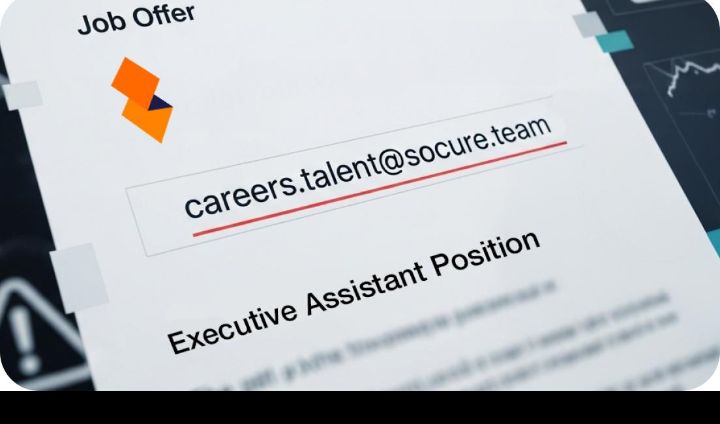
One of the first things to check before applying for a job online is the website address, also known as the URL.
Scammers sometimes create websites with names that resemble those of government agencies, established companies or recognised recruitment organisations. Their aim is to make applicants believe they are using an official application portal.
For example, a fraudulent website might add words such as “recruitment,” “career,” “application” or “portal” to an organisation’s name to create an address that looks convincing.
A website may also use a misspelled name, an unfamiliar domain or a link that redirects applicants to another page.
How to identify this warning sign
Before entering your details, check the full website address carefully.
- Compare the domain with the address published by the organisation itself.
- Look for misspellings, unexpected extra words or unusual domain endings.
- Be cautious if a link shortener hides the destination of a recruitment link.
- Check whether the application link is provided by an official announcement.
- If you receive a link through WhatsApp or Facebook, independently locate the organisation’s official website before proceeding.
A website ending in .gov.ng may be associated with a Nigerian government entity, but you should still verify the particular website and announcement. Similarly, a .com or .org address is not automatically fraudulent.
Important: HTTPS and the padlock symbol indicate an encrypted connection. They do not prove that a recruitment website is genuine.
2. The Recruitment Announcement Cannot Be Verified Officially
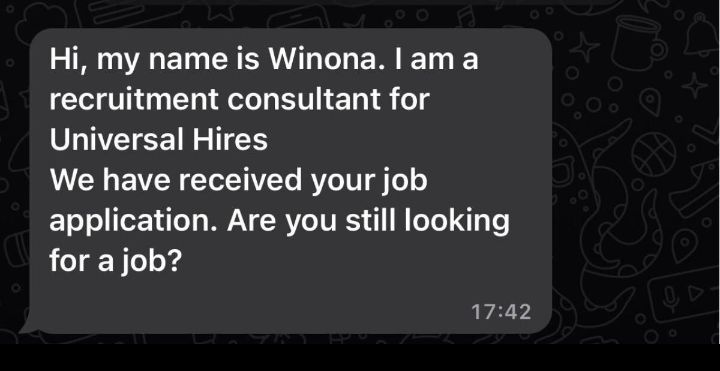
A recruitment announcement should be traceable to the organisation responsible for the vacancy or another credible, authorised source.
Fraudsters often circulate messages claiming that recruitment has started for organisations such as the Nigeria Police Force, Federal Civil Service Commission, Nigeria Security and Civil Defence Corps or other public institutions. They may attach application links and instruct people to register immediately.
However, the fact that an announcement is widely shared does not mean it is authentic.
A message may be copied into hundreds of WhatsApp groups or reposted by Facebook pages without being verified.
How to identify this warning sign
Check the recruitment announcement on the organisation’s official website and authorised communication channels.
Confirm the following:
- Has the organisation announced the recruitment exercise?
- Does the official announcement contain the same application link?
- Do the job positions and eligibility requirements match?
- Is the application deadline consistent with the official notice?
- Has the organisation issued a clarification or warning about fake recruitment links?
For example, if a message claims that a federal agency has opened its recruitment portal, do not rely only on a blog post or a WhatsApp message. Locate the agency’s official announcement independently.
If the information cannot be verified, wait before submitting personal details or making any payment.
Masterjob readers should also understand that a recruitment update published by an information website is not a substitute for confirmation from the recruiting organisation.
3. Applicants Are Asked to Pay Unofficial Recruitment Fees
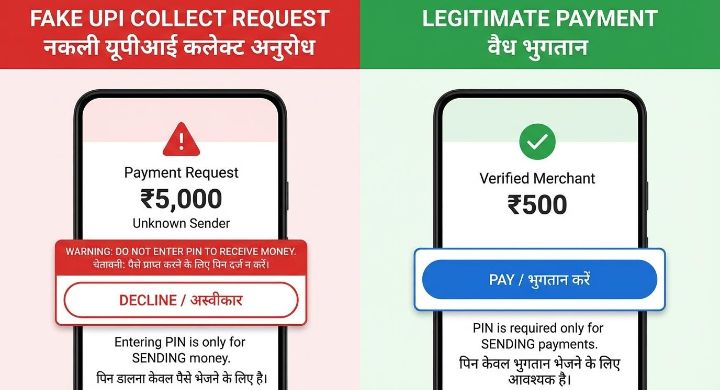
A demand for money is one of the most important warning signs to investigate when applying for a job online.
Scammers may tell applicants to pay for a recruitment form, shortlist placement, screening clearance, medical examination, appointment letter or guaranteed employment.
Some may claim that payment must be made immediately to prevent an application from being cancelled.
A person may also request money through a personal bank account, a mobile wallet or another payment channel that is not identified in the official recruitment instructions.
How to identify this warning sign
Before paying any recruitment-related charge, verify the instructions issued by the organisation responsible for the exercise.
Ask yourself:
- Does the official recruitment notice expressly require this payment?
- Is the payment amount stated in the official instructions?
- Is the payment channel authorised by the recruiting organisation?
- Is the recipient an organisation or an unexplained personal account?
- Can the organisation independently confirm that the charge is legitimate?
Do not assume that every recruitment exercise follows the same payment rules. Some legitimate application processes may have authorised charges, while others do not. What matters is whether the specific payment is officially required and properly documented.
Be especially cautious of anyone who promises to sell you a shortlist, guarantee an appointment or influence a recruitment officer in exchange for money.
Never pay an unofficial agent simply because they claim to have access to recruitment officials.
4. The Website Promises Guaranteed Employment
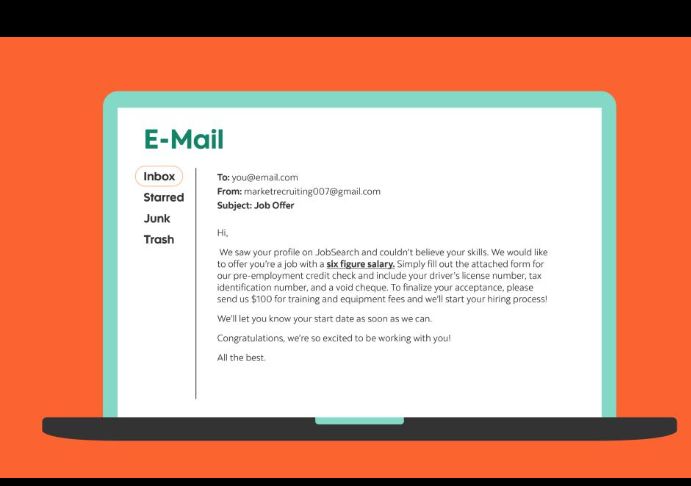
Recruitment scammers understand that many applicants are eager to secure employment. They may use this pressure to advertise guaranteed jobs or promise automatic selection after payment.
Examples of suspicious claims include:
- “Pay now and secure your federal job.”
- “Guaranteed appointment letter for successful payment.”
- “Automatic shortlist available for interested applicants.”
- “Our agent will ensure you pass the recruitment screening.”
- “Pay a special fee to change your application status.”
These statements should raise serious concerns, particularly when the person making the promise cannot provide verifiable authority from the recruiting organisation.
How to identify this warning sign
Check whether the recruitment process described in the announcement matches the organisation’s published selection procedure.
Legitimate recruitment decisions generally depend on the applicable eligibility requirements and selection process. An unknown website operator cannot legitimately guarantee an appointment simply by collecting money.
Be careful if someone claims to have inside information that can override official recruitment procedures.
Also, do not trust a website simply because it displays a list of supposedly successful candidates. Verify the shortlist through the relevant official source.
Remember: Paying money to an unofficial person does not guarantee employment, even if that person sends you an appointment letter or other official-looking document.
5. The Website Pressures You to Act Immediately

Another warning sign is excessive pressure to apply or pay immediately.
A suspicious recruitment message may claim that only a few positions remain, the portal will close within minutes or applicants must pay immediately to retain their chances.
Scammers use urgency to prevent people from checking the information properly.
However, genuine recruitment exercises can also have strict deadlines. The presence of a deadline alone does not prove that an opportunity is fraudulent.
How to identify this warning sign
Check the closing date against the official recruitment announcement.
Be cautious when:
- The deadline appears only in a private message.
- The sender refuses to provide an official source.
- You are told not to contact the recruiting organisation.
- You must pay before you are allowed to verify the vacancy.
- The person threatens to cancel your application unless you transfer money immediately.
Do not let fear of missing an opportunity prevent you from checking its authenticity.
If a genuine application deadline is approaching, you should still be able to confirm the requirements and application procedure through the authorised source.
A legitimate-looking countdown timer or urgent message is not evidence that a recruitment exercise is real.
6. Important Vacancy Details Are Missing
A recruitment website should provide enough information for applicants to understand the vacancy and determine whether they qualify.
A suspicious advertisement may contain only a job title, a promise of employment and a link asking visitors to submit their personal information.
It may not identify the recruiting organisation clearly or explain the eligibility requirements.
Other advertisements may contain inconsistent dates, unclear job descriptions or instructions that change from one page to another.
How to identify this warning sign
Before applying, look for important details such as:
- The name of the recruiting organisation.
- The position or category of employment.
- The required qualifications and eligibility conditions.
- The application procedure.
- The official opening and closing dates, where applicable.
- The authorised application portal or contact channel.
- Any relevant screening or selection instructions.
Compare these details with information published by the organisation itself.
For example, if an advertisement claims to offer a federal government position but does not identify the responsible agency or provide a verifiable application source, do not submit your information until the details are confirmed.
Keep in mind that short announcements may not contain every detail. Missing information is a reason to investigate, not automatic proof of fraud.
7. The Website Uses a Government Logo Without Proof of Authorisation
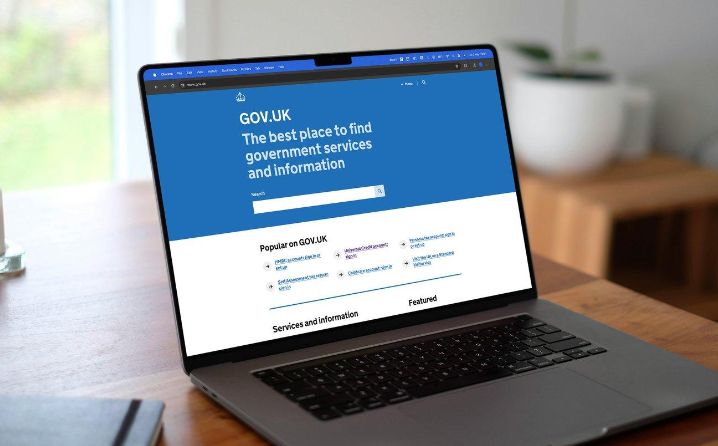
Some fraudulent recruitment websites use government logos, official-looking colours, copied banners or photographs of public officials to appear trustworthy.
A familiar logo may make a website look genuine at first glance. However, logos and website designs can be copied.
Scammers may also reproduce an official announcement and replace the original application link with their own.
How to identify this warning sign
Do not rely on a logo or a professional-looking website as proof of authenticity.
Instead:
- Identify the organisation named in the announcement.
- Locate its official website independently.
- Check whether the same recruitment notice appears on an authorised channel.
- Compare the application link with the one provided by the organisation.
- Look for official clarifications if the announcement seems suspicious.
A genuine government logo does not make every page displaying it genuine.
Likewise, poor website design does not automatically mean that a website is fraudulent. The most important issue is whether the website and recruitment notice can be verified through credible sources.
If you cannot establish that the website is authorised to collect applications, do not submit sensitive information.
8. The Website Requests Sensitive Information Too Early
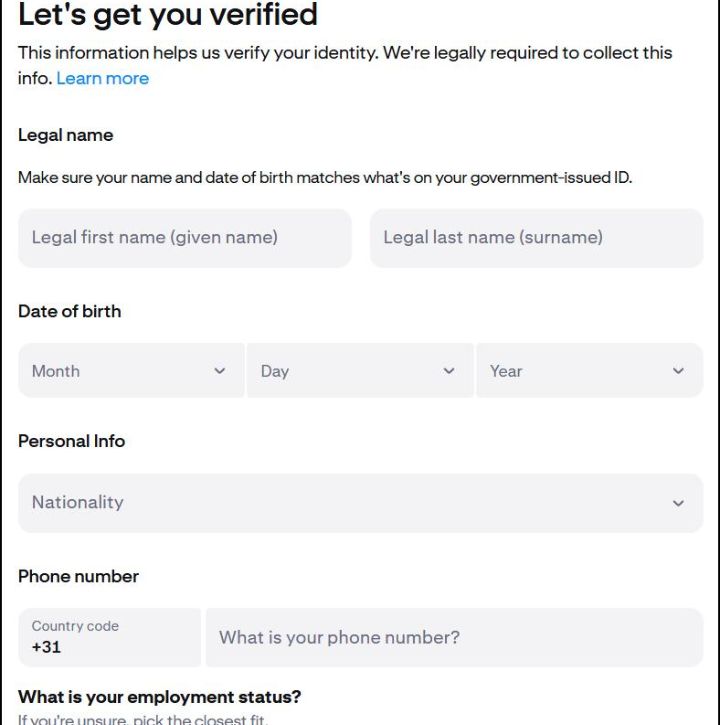
Recruitment applications may legitimately require personal information, including your name, contact details, educational qualifications and identification details.
However, applicants should be careful when a website requests sensitive information before they have confirmed that the recruitment exercise is genuine.
A fraudulent platform may ask for banking passwords, card PINs, one-time passwords (OTPs), email passwords or other information that is not ordinarily needed to assess a job application.
The operator may then use the information to attempt financial fraud or gain access to personal accounts.
How to identify this warning sign
Before completing an application form, ask whether the information requested is relevant to the recruitment process and whether the portal is official.
Take particular care if a website or supposed recruitment agent requests:
- Your bank account password or ATM card PIN.
- An OTP sent to your phone or email.
- Your email or social media password.
- Full payment-card security details.
- Unnecessary identity documents through an unverified link.
- Money to unlock, release or activate your personal information.
Never disclose your banking PIN, account password or OTP to someone claiming to be a recruitment officer.
If identity documents are required by a legitimate recruitment process, upload them only through a verified, authorised channel and follow the organisation’s instructions.
If you have already shared sensitive information with a suspicious website, secure the affected accounts immediately and contact your bank or service provider if financial information may have been exposed.
9. An Unknown Agent Claims to Have Insider Connections

Some recruitment scams are carried out through individuals rather than standalone websites.
An unknown person may contact applicants on WhatsApp, Facebook, Telegram or by telephone and claim to have connections with a recruitment agency or government institution.
The person may promise to help an applicant pass a screening exercise, change an application result, secure a shortlist position or obtain an appointment letter.
They may request payment, identification documents or other personal information as part of the supposed arrangement.
How to identify this warning sign
Be cautious when an individual claims to have special influence over an official recruitment process.
Watch out for statements such as:
- “I can guarantee your appointment if you pay me.”
- “Send money so I can put your name on the shortlist.”
- “I have a connection inside the recruitment board.”
- “You do not need to follow the normal application process.”
- “Keep this payment confidential because it is an insider arrangement.”
Verify any service or instruction directly with the responsible organisation.
Do not assume that a person is authorised to recruit candidates simply because they use an official-looking profile picture, display a copied identification card or claim to work for a government agency.
Even if the person knows details about a real recruitment exercise, that does not prove that their offer of assistance is genuine.
Do not pay an individual who promises to manipulate recruitment results or guarantee employment.
10. The Website Has No Credible Way to Verify Who Operates It

Before submitting an application, try to establish who operates the website and whether the organisation can be verified independently.
A suspicious platform may provide no meaningful information about its operator, use inconsistent organisation names or display contact details that cannot be connected to the employer.
It may also list a telephone number or email address that exists only on the suspicious website.
However, a contact page alone does not prove that a website is genuine. Scammers can create contact pages and use professional-looking email addresses.
How to identify this warning sign
Check the website’s About, Contact and Privacy Policy pages where available, but do not treat them as proof of legitimacy.
Then verify the organisation independently:
- Search for its official website and published contact information.
- Compare the contact details with those published by the organisation itself.
- Check whether the recruitment announcement identifies a real, responsible employer.
- For private recruitment agencies, check relevant licensing or registration information where applicable.
- Contact the organisation through a verified channel if you need clarification.
For private employment agencies, the Federal Ministry of Labour and Employment provides a recruiters’ licence resource:
https://labour.gov.ng/recruiters-licence/
Use the resource to understand the relevant licensing process and verify information where applicable. Do not assume that every website advertising a vacancy is itself a recruitment agency; an employer may recruit directly.
If you cannot establish who is collecting your information or whether the application portal is authorised, postpone the application until you can verify it.
How to Verify a Recruitment Website in Nigeria Before Applying
Knowing the warning signs is useful, but job seekers also need a clear process for checking a recruitment announcement.
Follow these steps before submitting an application.
Step 1: Identify the organisation responsible for the vacancy
Find out which organisation is actually recruiting. Do not rely only on the name or logo displayed in a forwarded message.
Step 2: Locate its official website independently
Search for the organisation’s official website instead of automatically clicking the link in a WhatsApp message, Facebook post or unsolicited email.
Step 3: Find the original recruitment announcement
Check whether the vacancy has been announced through an authorised channel. Compare the application link, job details, qualifications and deadline.
Step 4: Verify the application procedure
Read the official instructions carefully. Confirm where to apply, what documents are required, whether any payment is authorised and how applicants will receive updates.
Step 5: Check before sharing personal information
Do not submit sensitive information until you have verified the website. Never share passwords, PINs or OTPs with supposed recruitment agents.
Step 6: Confirm anything that remains unclear
Use contact details obtained independently from the organisation’s official website or another reliable source. Do not rely exclusively on a telephone number supplied by the suspicious sender.
Step 7: Keep evidence of your application
Save the official recruitment notice, application confirmation and relevant communication. These records may help if you need to follow up or report a problem.
Official Recruitment and Verification Resources in Nigeria
The following resources can help applicants begin their checks. Always confirm that the relevant recruitment notice is current and that any linked application portal is authorised for that exercise.
| Organisation or resource | How it can help |
|---|---|
| Federal Ministry of Information and National Orientation | Publishes government announcements and public warnings, including the FCSC warning about unauthorised recruitment links. https://fmino.gov.ng/ |
| Federal Civil Service Commission | Use the Commission’s verified official channels to check civil service recruitment announcements. Confirm the correct address independently before applying. |
| Police Service Commission | https://psc.gov.ng/ — a starting point for checking Police Service Commission announcements. |
| Federal Ministry of Labour and Employment | https://labour.gov.ng/recruiters-licence/ — information relevant to recruiters’ licensing. |
| The recruiting organisation itself | Its verified website and authorised communication channels should be used to confirm the specific vacancy and application procedure. |
Do not assume that a recruitment announcement is genuine merely because it appears on a blog, a social media page or a website that lists other real opportunities.
What Should You Do If You Have Already Been Scammed?
If you have already paid money or shared information with a suspicious recruitment website, act quickly.
1. Stop sending money
Do not make additional payments to recover your application, obtain a refund or prevent your supposed appointment from being cancelled. A scammer may attempt to demand more money after the first payment.
2. Preserve the evidence
Keep screenshots of the website, messages, phone numbers, payment instructions, transaction receipts and any documents you received.
Avoid deleting important messages before you have preserved the relevant evidence.
3. Contact your bank or payment provider
If you transferred money, contact your bank or payment provider promptly. Explain what happened, provide the transaction details and ask what options are available. Recovery is not guaranteed, so act as soon as possible.
4. Secure your accounts
If you shared a password, change it immediately and change it anywhere else you reused it. If your banking information may have been compromised, contact your bank. Never disclose an OTP to someone claiming to help recover your money.
5. Report the incident
Report the suspected fraud to the relevant law enforcement or cybercrime reporting authority in Nigeria. Provide the evidence you preserved and follow the authority’s official reporting instructions.
6. Warn other applicants responsibly
You can alert others to the suspicious link, but avoid making unsupported public accusations against a named person or organisation. Share verifiable evidence and encourage people to confirm recruitment information through official channels.
Frequently Asked Questions
How can I identify a fake recruitment website in Nigeria?
Check whether the website address is authentic, the recruitment announcement is officially confirmed, the application instructions are consistent and any requested payments are authorised. Be cautious of guaranteed employment, pressure to act immediately and requests for passwords or OTPs.
Are all recruitment websites that ask for payment fake?
No. You must check the rules for the particular recruitment exercise. Some processes may have authorised charges, while others do not. Never pay an unofficial agent or rely on a payment demand that cannot be verified through the responsible organisation.
Does HTTPS mean a recruitment website is genuine?
No. HTTPS helps protect the connection between your browser and the website, but scammers can also use HTTPS. Verify the organisation and recruitment announcement independently.
Can a fake recruitment website use a government logo?
Yes. Logos, colours and official-looking documents can be copied. Confirm the website address and recruitment announcement through the organisation’s authorised channels rather than relying on appearance.
What should I do if a recruitment agent promises to secure my appointment?
Do not pay the agent or provide sensitive information. Contact the recruiting organisation through independently verified details and confirm whether the person or service is authorised.
Where can I verify government recruitment in Nigeria?
Start with the official website and authorised communication channels of the government agency responsible for the vacancy. You can also check relevant government announcements and public warnings, but always confirm the specific recruitment exercise with the responsible organisation.
How can I report a fake recruitment website?
Preserve the link, messages, payment receipts and other evidence. Report the suspected fraud to the appropriate law enforcement or cybercrime reporting authority and contact your bank promptly if you have transferred money.
Final Advice for Nigerian Job Seekers
Fake recruitment websites can look convincing, especially when they imitate government agencies or advertise opportunities that applicants have been waiting for.
Before applying for any job, take a few minutes to verify the organisation, inspect the website address, read the official instructions and check whether any requested payment is authorised.
Do not allow the fear of missing an opportunity to push you into making a rushed payment or sharing sensitive information with an unverified website.
At Masterjob.com.ng, our goal is to help Nigerian job seekers access useful recruitment information and make informed decisions. Always confirm important recruitment announcements and application instructions through the responsible organisation’s official channels before proceeding.
Stay informed, verify before you apply, and protect your personal information.
Related Articles:
NDLEA Recruitment 2026/2027: Portal, Requirements, Application Form, How to Apply & Latest Updates
Nigerian Customs Service (NCS) Recruitment Portal 2026: Requirements & Complete Application Guide
EFCC Recruitment Portal 2026/2027: Application Form, Requirements & How to Apply
Nigerian Navy Recruitment 2026/2027: Application Form, Requirements, Portal & How to Apply
INEC Adhoc Staff Recruitment 2026: 2027 Election Portal, Requirements & How to Apply
FRSC Recruitment Shortlist 2026 Batch B: Second Batch For ND, NCE, SSCE & OND
CDCFIB Shortlist Portal 2026: Portal Login & How to Check CDCFIB Shortlist Step by Step
NPF Shortlisted Candidates 2026: Nigeria Police Shortlist PDF, Final List & Training Date